This lesson is outdated
We're recording a new version. Until it's ready, some details may no longer be accurate.
Introducing the Marketing Engineer
Why we’re betting big on the Marketing Engineer as the future of marketing
— and you should too.
Right now, from Series B startups to Fortune 500s, thousands of marketing teams are asking the same question: How do we do more, better marketing without adding more people?
Every major shift in how people discover, evaluate, and buy has added more work for marketing, permanently.
Social didn't replace search. It added to it. Influencers didn't replace social. They added to it. Video didn't replace written content. It added to it. AI search isn't replacing anything either; It's an entirely new layer on top of everything that already existed. The amount of work marketing teams are expected to do grows exponentially. Headcount grows linearly.
For decades, there was no way to get ahead of it, so we tackled it with brute force. More people, more hours, more manual work. We got so used to it that we stopped noticing how broken it was.
Times have changed.
Today, we have autonomous agents that can research, draft, analyze, and execute on your behalf. LLMs that can generate and personalize content at scale. AI that can reason, judge, and act. Work that would've taken a team a week can now happen overnight.
Most marketing teams haven't figured out what to do with this. Some generate mountains of mediocre content that dilutes their brand. Others use AI as fancy autocomplete and drown in the same manual work they've always done.
Some teams have figured it out. And over the past year, both at Profound and across the teams we work with, we've noticed they all have one thing in common: someone who went deep.
Not deep on AI as a concept, deep on building with it. Someone who started as a marketer and taught themselves how to code, connect APIs, and architect systems that run entire workflows without manual intervention. They're the person the rest of marketing goes to when they need something that doesn't exist yet. The person who looks at a manual process and sees a system. The person who's already built half the tools their team relies on, even though nobody asked them to.
These people weren't hired as engineers. They were marketers who started building. And what they've built has made them indispensable: they're now the person who owns how their team uses AI. They have the technical skills to build real systems and the marketing judgment to know what's worth building. They see the workflow nobody else questions and think: this should run itself.
The work they're doing has outgrown every existing job title.
We started calling them Marketing Engineers.
What Marketing Engineers do?
Marketing Engineers sit inside your marketing team and build the systems, agents, and automations that make every function faster. They build at the system architecture level, with the goal of automating at the campaign level.
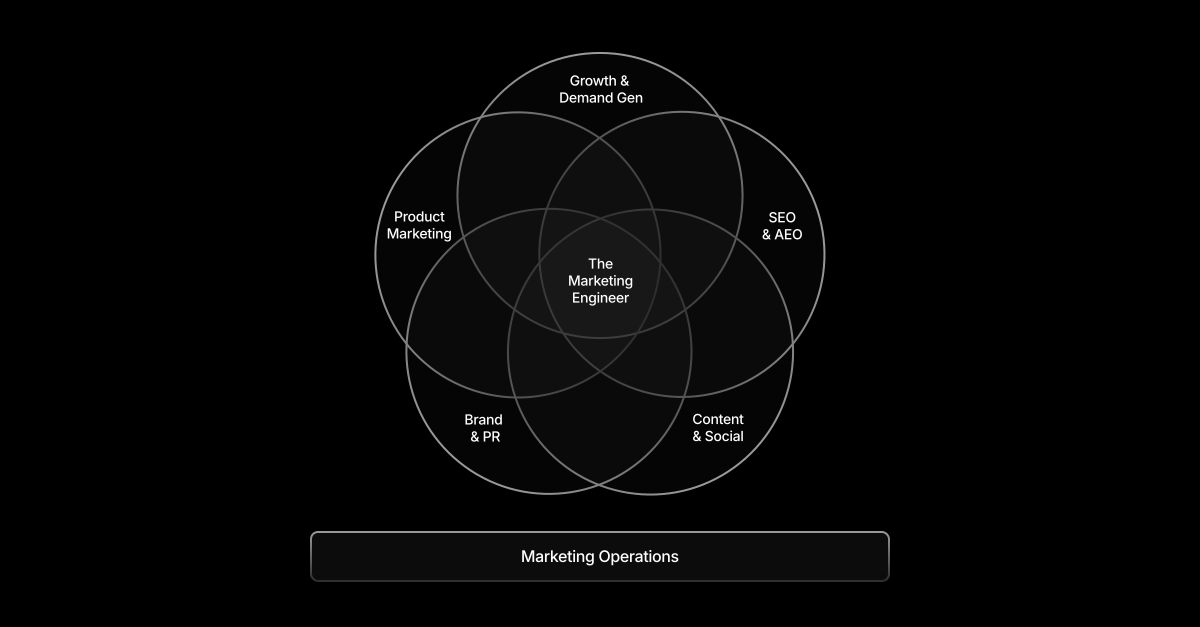
The job has two halves.
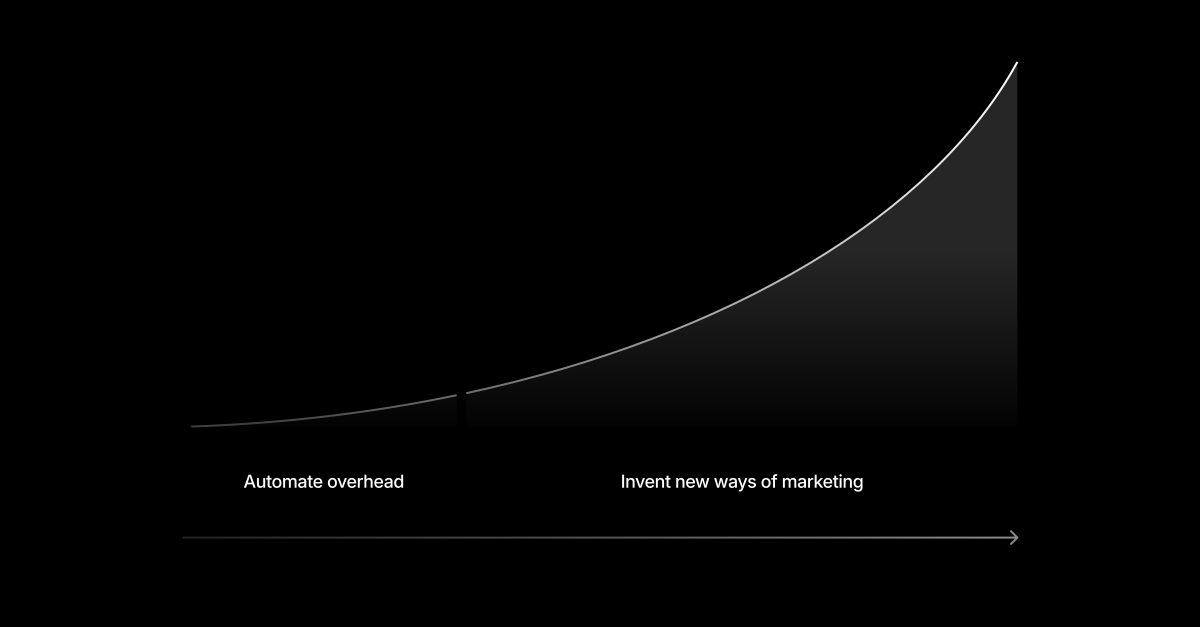
- The first half: accelerate the existing playbook. They shadow each function. They watch how PR monitors sentiment, how demand gen manages spend, how product marketing updates battlecards. They're looking for the steps that repeat, the decisions that follow rules, the handoffs that could be automated. Then they build working systems that handle the recurring parts, keeping humans in the loop only where judgment and taste matter.
We've seen some teams where Marketing Engineers focus primarily on eliminating overhead from traditional workflows. At Profound, however, we believe the real opportunity is much bigger. Marketing Engineers should do everything. - The second half: invent what doesn't exist. Once the overhead is automated, the Marketing Engineer starts proactively tackling novel challenges. Product marketing is struggling with competitive visibility? Build an agent that catches pricing changes in real time and pings sales with an updated battlecard before the next call. Brand is saying a lack of reviews is hurting trust? Build an agent that scans 800 customer calls, identifies champions, and writes personalized review requests in minutes.
The second half is where the role earns its name. Automating existing workflows is valuable. Inventing capabilities that didn't exist before is how you win in the Age of AI.
Marketing Engineering in practice
Accelerating competitive intelligence
The old way: Product marketing tracks competitor pricing changes, feature launches, and positioning shifts by manually checking websites and socials. Maybe there's a #competitive-intel Slack channel that crowdsources news from the wider company. If anything changes, there's lead time for the product marketer to manually update battlecards, adjust talk tracks, or send out competitive positioning comms.
The new way: A Marketing Engineer builds an agent that monitors hundreds of competitive surfaces in real time. A competitor changes their pricing? The agent judges the severity and reacts accordingly. If it's a sharp increase, the agent Slacks an updated talk track and battlecard to sales. It drafts an email to price-sensitive prospects and stages a social post for review. It updates your comparison page to reflect the latest changes. Everything is done in minutes.
The product marketer who spent ten hours a week on competitive maintenance, while still feeling unsure if they were covering every update, now spends that time on strategy.
This is acceleration. It's where a Marketing Engineer earns the trust of the team. But accelerating the existing playbook is only part of the job.
Invention is what makes Marketing Engineers transformative.
Imagine, you build an agent that monitors Reddit threads, community discussions, and forum conversations that are actively shaping how AI platforms talk about your category. Not a social listening dashboard. An agent that identifies the most influential conversations, understands where your brand is missing, and crafts responses that position you where the discussion is actually happening. Your brand doesn't just monitor. It participates, continuously, across hundreds of conversations your team would never find on their own.
Or turn a product launch into a review generation system. Instead of manually hunting down happy customers, build an agent that identifies users already getting value (based on usage data, support interactions, engagement patterns), personalizes outreach to each one, and generates a steady stream of G2 reviews while the momentum is still there. Not a quarterly advocacy push. A persistent system that runs as long as the product is live.
Or build a system that takes every webinar in your library and turns it into an AEO-optimized article, structured for how AI platforms consume and cite content. From there, the system continually refreshes each piece weekly with new data and new competitive context.
How Marketing Engineering and Marketing Ops work together
A question we get a lot is whether Marketing Engineering is just Marketing Ops with a new name.
It's not.
Marketing Ops is your foundation: clean data, working integrations, reliable processes. If nothing breaks, they've done their job.
Marketing Engineers build on that foundation, but the similarity ends there. They're building agents, automations, and entirely new capabilities, and they're measured on the same KPIs as any other marketer: conversion, traffic, pipeline influenced, cost per lead.
Ops keeps the infrastructure running. Marketing Engineering uses that infrastructure to invent new ways of marketing.
You need both: most companies already have Ops, the Marketing Engineer is what's missing.
Where Marketing Engineers come from
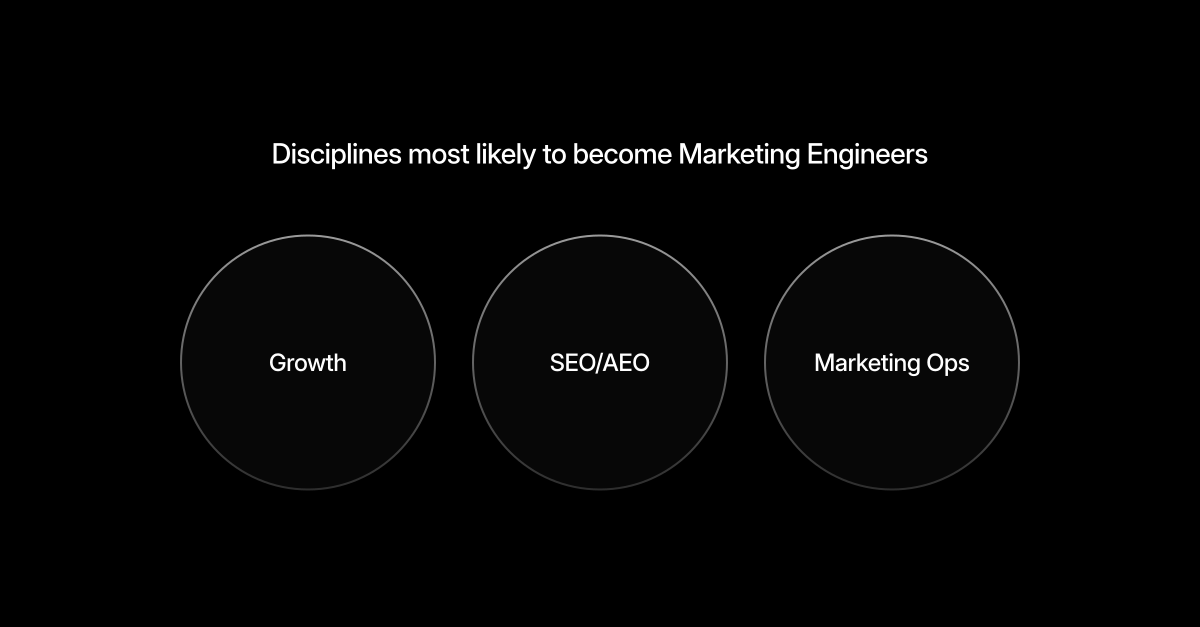
Most of the first Marketing Engineers aren't coming from engineering backgrounds. They're coming from growth marketing, AEO, and marketing ops.
Growth marketers already think in systems and experiments. The Marketing Engineer role just gives that instinct a bigger canvas.
AEO practitioners are a less obvious fit, but they might be the most interesting one. AI search is collapsing the entire funnel into a single answer. To show up in that answer, you need to coordinate content, sentiment tracking, buyer journey mapping, and the systems that hold it all together. The AEO people who are thriving right now have already started building these systems on their own.
Marketing ops is the most natural transition. Already technical, already system-oriented. The only shift is what you're measured on: reliability vs. traditional marketing KPIs.
These backgrounds seem contradictory: technical but empathetic, systems-minded but creative, comfortable with code but obsessed with marketing outcomes. That tension is exactly what makes the role hard to hire for and high-leverage when you find the right person.
Companies are hiring for this role today
In 2012, data engineering emerged at Facebook and Airbnb as a discipline distinct from business intelligence. In 2023, Clay named and formalized GTM engineering, collapsing traditional sales roles into a single function. Today, about a hundred GTM engineer job listings go live every month.
Marketing Engineering is next. And its birth is happening right now.
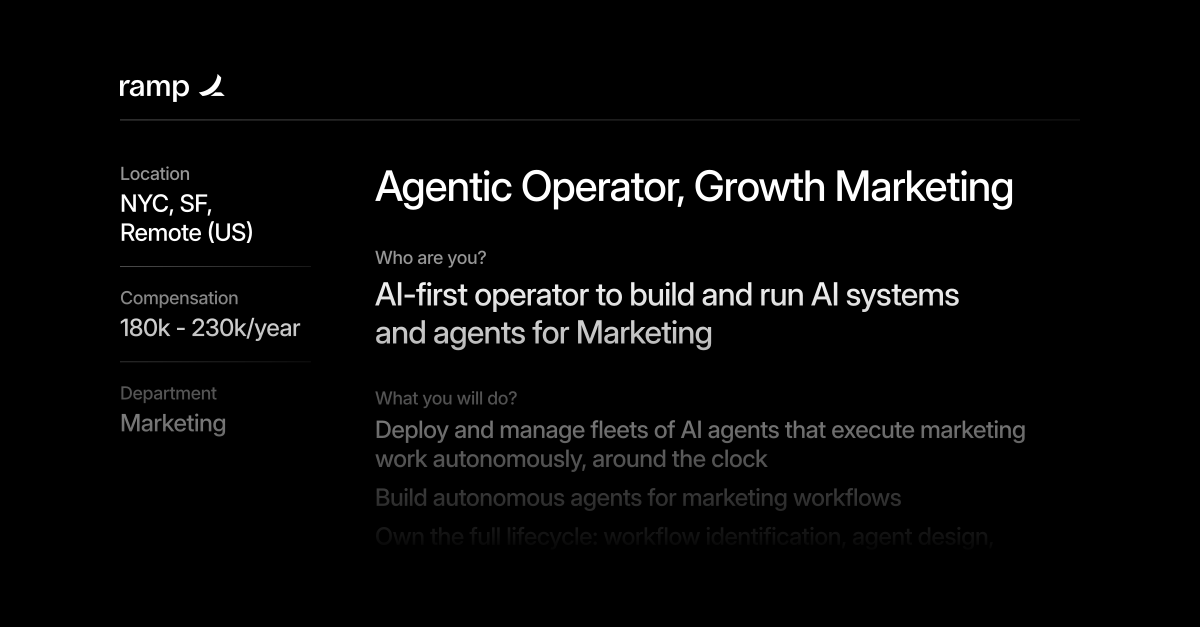
Since we announced the role at Zero Click SF, marketers have started raising their hands saying they finally have a title for what they do. Ramp is hiring an "Agentic Operator, Growth Marketing." American Express posted for a "Marketing Automation Engineer."
The people are already doing the work. What's been missing is a shared name and a shared standard.
So we built one.
Profound's Marketing Engineering course is a three-module program that teaches you how to think in systems, build agents that run real marketing workflows, and operate as an engineer inside a marketing team. It covers everything from identifying what to automate, to writing prompts that work without you, to building full systems from discovery to deployment. It's the curriculum this discipline has been missing.
The first cohort of certified Marketing Engineers will define the profession. They'll set the bar for what this role means, what it requires, and what it produces. Every discipline starts this way. The first people through the door are the ones who shape it for everyone who comes after.
If you've read this far, you're probably already doing this work, or believe it’s what’s next. Now there's a name for it, a standard to measure it against, and a course to sharpen it.
Meet your mentors

Josh BlyskalHead of Education

James CadwalladerCo-founder, CEO